

Temp worker safety training for Michigan warehouses and plants
Temp worker safety training is provided by both the staffing agency and the employer where they're placed. The staffing agency covers general hazards before they begin work, and the host employer trains them on that location's specific hazards, according to OSHA's guidance on temporary workers. RHO Hiring gives a safety orientation to every worker prior to the first shift and plans the first day with you. Call us at (248) 843-0000.
Need workers? Call248-843-0000A manager usually calls back within a couple of hoursWho is responsible for a temp worker's safety?
The staffing agency and your site employer are both responsible for the safety of temporary workers. Temporary workers are unfamiliar with your site on day one: unfamiliar machines, unfamiliar traffic patterns, unfamiliar rules. That first day is when injuries occur, which is why RHO trains your workers on safety prior to their start date and plans onboarding and day one with you.
According to OSHA, the federal government agency in charge of workplace safety and health, the staffing agency and host employer are jointly responsible for a temporary worker's safety. Further OSHA guidance regarding training explains that the staffing agency and host employer should agree on who is responsible for what training. Usually, the staffing agency is responsible for training on general safety topics. The host employer typically trains temporary workers on site-specific hazards because they have greater knowledge of these hazards. In Michigan, MIOSHA runs the state's workplace safety program.
The federal OSH Act even includes a general duty clause: every employer must provide its employees a workplace free from recognized hazards that are causing or are likely to cause death or serious physical harm. OSHA's guidance asks host employers to treat temporary workers as they would their own employees when it comes to training and protection.
What RHO Hiring covers before the first shift
RHO provides each worker with a safety orientation prior to the beginning of their assignment.
Reporting hazards and injuries
Immediately report all injuries, near misses and unsafe conditions to the site supervisor and RHO, no matter how minor. We expect all employees to report, and will never punish anyone for doing so.
Equipment rules
Never use a forklift, machine or equipment you have not received training and authorization to operate at that location regardless of familiarity with the equipment elsewhere.
Personal protective equipment
Purpose of PPE, how to wear PPE, and the "wear what the site requires for your entire shift" rule.
Warehouse and plant basics
Walk only on designated walkways. Be aware of forklift traffic. Keep hands and fingers away from moving parts and pinch points. Never touch equipment that has been locked or tagged out of service.
Lifting and pace
Use legs to lift. Use carts and pallet jacks. Request assistance with heavy or awkward loads. Take breaks when scheduled.
Heat and cold
Wear clothes appropriate for hot plants, cold shipping docks and freezers. Drink water throughout your shift. Report feeling dizzy or ill.
The right to ask
Any employee can stop and ask a supervisor for clarification before completing a task they believe may not be safe.
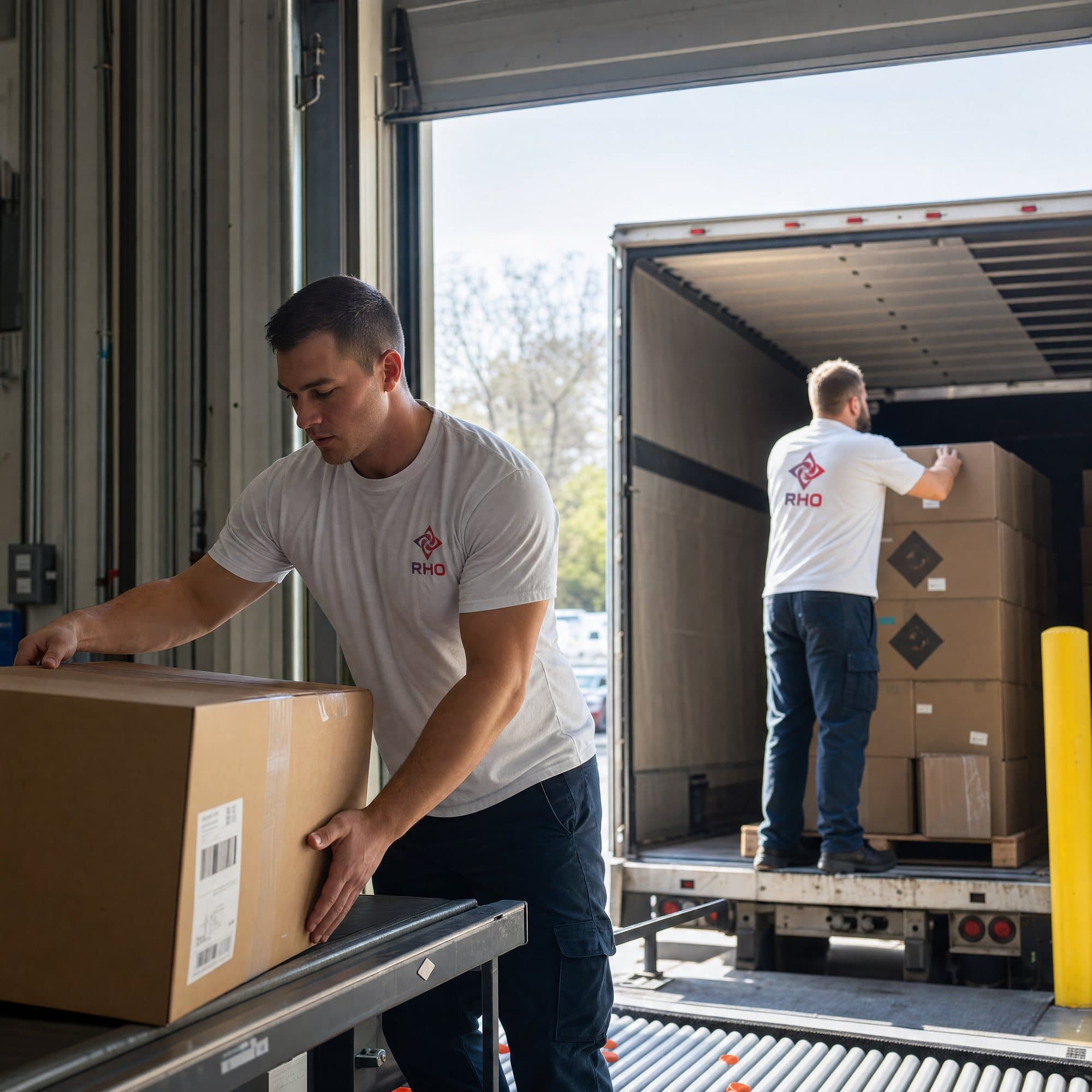
How is PPE agreed before the first shift?
Personal protective equipment (PPE) is confirmed prior to the first shift so no one shows up under-equipped for what the site needs. For every order we verify:
- What PPE is needed in each area of the site: safety glasses, gloves, hearing protection, hard hats, high-visibility vests, hairnets or gowns.
- Whether safety-toe footwear is required, so workers arrive in it.
- Who supplies each item, and where employees pick it up on day one.
- Any task that requires additional protection, like cut-resistant gloves, face shields or respirators, and the associated training.
- That someone at the site demonstrates how to wear and care for each item.
- That it is worn by the worker for the entire shift and reported to a supervisor when damaged or missing.
Forklift training: what the rules say, in plain words
OSHA's Powered Industrial Trucks rule (29 CFR 1910.178) states that no one may operate a forklift until they have received training and evaluation. Training consists of three elements: formal instruction, training on the truck itself, and evaluation of the operator in the workplace. The employer must maintain documentation that each operator received training and evaluation.
Operators must receive refresher training if they have been seen driving unsafely or involved in accidents or near misses, if they are assigned to drive a different type of truck, or if changes occur at the workplace affecting safe operation. Operators are evaluated on the job at least every three years. MIOSHA's Part 21 standard for powered industrial trucks in Michigan requires the same types of training, evaluation and refresher courses.
OSHA's guidance document on temporary workers states that both the staffing agency and the host employer are responsible for ensuring forklift training. Since the evaluation will take place on your trucks and in your aisles, RHO provides forklift operators familiar with the type of trucks you have and your site evaluates and authorizes them prior to driving. Learn more about OSHA's forklift training requirements in our OSHA forklift training guide.
When an injury or near miss happens
- 01
Get help first
In case of serious injury, dial 911. Otherwise, the worker reports the accident to the site supervisor as soon as possible and seeks first aid or care in accordance with procedures established at the site.
- 02
Tell RHO the same day
The worker and supervisor will both notify RHO. Call (248) 843-0000.
- 03
Report near misses too
A slip where you didn't fall or a forklift that stopped just in time gets reported the same way. Near misses tell us where the next injury could come from.
- 04
Keep the records straight
According to OSHA's recordkeeping guidance, the employer who directly supervises the temporary worker on a day-to-day basis will record the injury on its OSHA injury log. We agree on this with you before the first shift.
- 05
Fix the cause
RHO and your supervisor review the incident and make changes where needed: training, PPE, the task itself or how workers are matched to tasks. Workers will not be penalized for reporting.
Temp worker safety questions
Can a temp worker stop a task they think is unsafe?
Yes. Any employee can stop and ask a supervisor for clarification before completing a task they believe may not be safe. RHO also tells every worker never to use a forklift, machine or equipment they haven't been trained and authorized to operate at that location.
Who records a temp worker's injury on the OSHA log?
Usually the host employer. According to OSHA's recordkeeping guidance, the employer who directly supervises the temporary worker on a day-to-day basis records the injury on its OSHA injury log. RHO agrees on this with you before the first shift.
Are workers penalized for reporting an injury or near miss?
No. RHO expects every employee to report injuries, near misses and unsafe conditions to the site supervisor and to RHO, no matter how minor, and never punishes anyone for doing so. Near misses tell us where the next injury could come from.
Dependable people for your facility

Need workers? Request a call
Please leave your name and number and a manager will call you back, typically within a couple of hours. Or call now.
Call RHO248-843-0000- A manager calls you back
- Day, night and weekend shifts
- Locally owned, not a franchise
Your details
Only your name and phone number are required.