
In short: A Michigan cannabis facility needs detail-oriented individuals for trimming, cultivation support, post-harvest work and packaging. Staffing needs will increase and decrease based on harvest schedules. Build teams around your harvest schedule. Train every new employee on your policies, sanitation standards and product tracking procedures before they begin work. Once trained, keep employees working in the same rooms. RHO Hiring can staff your cannabis grow and processing facilities: (248) 843-0000.
Cannabis work may look easy from the outside. Anyone who's operated a trim room knows different: the pace is steady for hours, standards exact, rooms controlled and every gram needs to be accounted for. Enter the old "send me some general labor" mindset and you're asking for trouble.
Who regulates what in Michigan
Michigan's Cannabis Regulatory Agency (CRA) oversees the state's adult-use establishment licensees and medical facility licensees under the Michigan Regulation and Taxation of Marihuana Act, Medical Marihuana Facilities Licensing Act, and their respective administrative rules. The CRA issues advisory bulletins and technical bulletins for licensees. Through its license lookup, the public can confirm an adult-use establishment license or medical marijuana facility license.
Tracking is where it hits closest to home with every employee. According to the CRA, Metrc is Michigan's statewide seed-to-sale tracking system: serialized tags are placed on every plant, and labels on wholesale packages to track inventory through each growth stage, through drying and curing, and all the way to retail sale. On the floor, that means product and tag stay together, all the time, on every table.
What this means for staffing: The policies are the licensee's responsibility. Your license, your standard operating procedures and the state's regulations determine who can be in what room, what gets recorded and how product flows. Communicate what affects employees to your agency before anyone is matched, and cover it during orientation before anyone begins work.
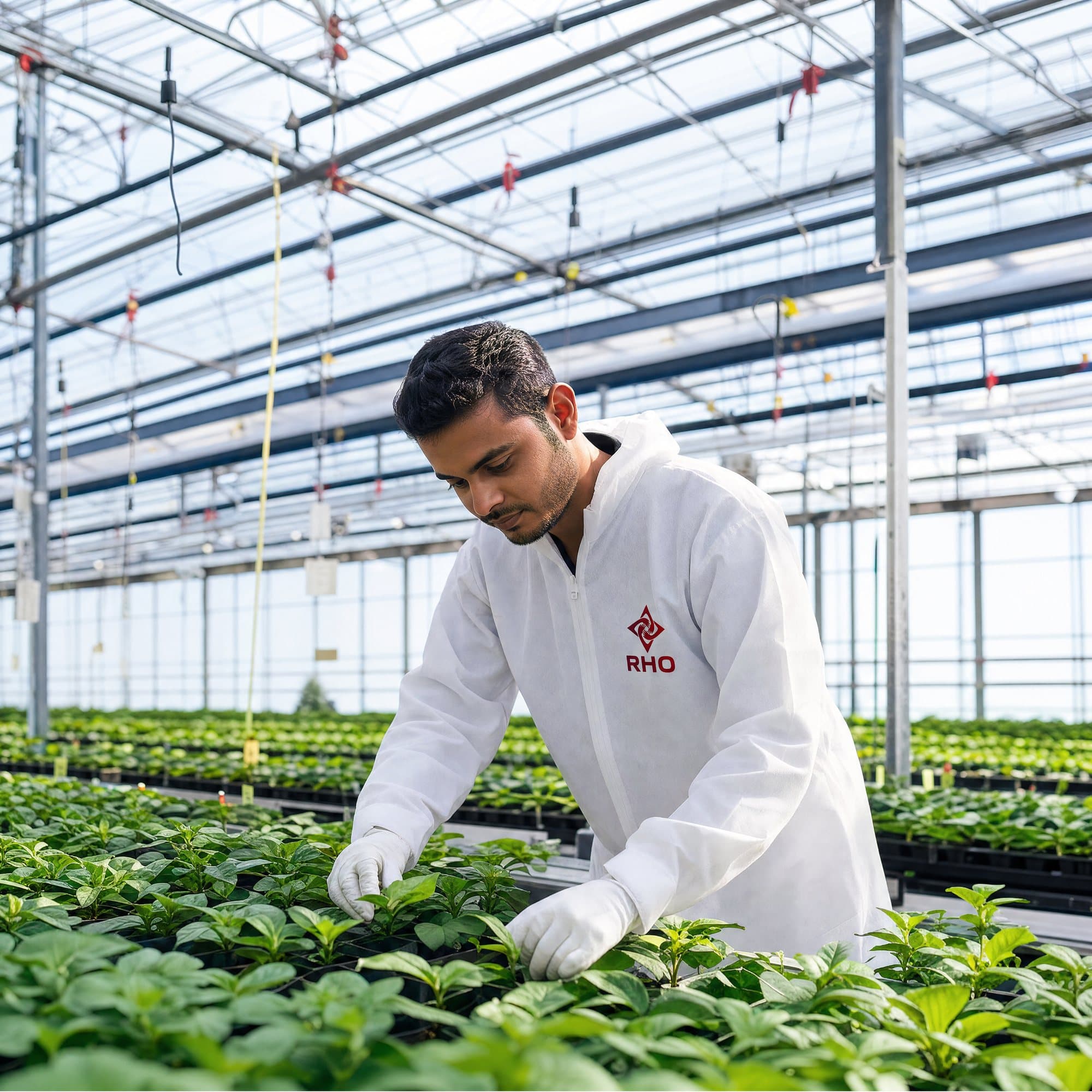
The roles in a grow and a processing facility
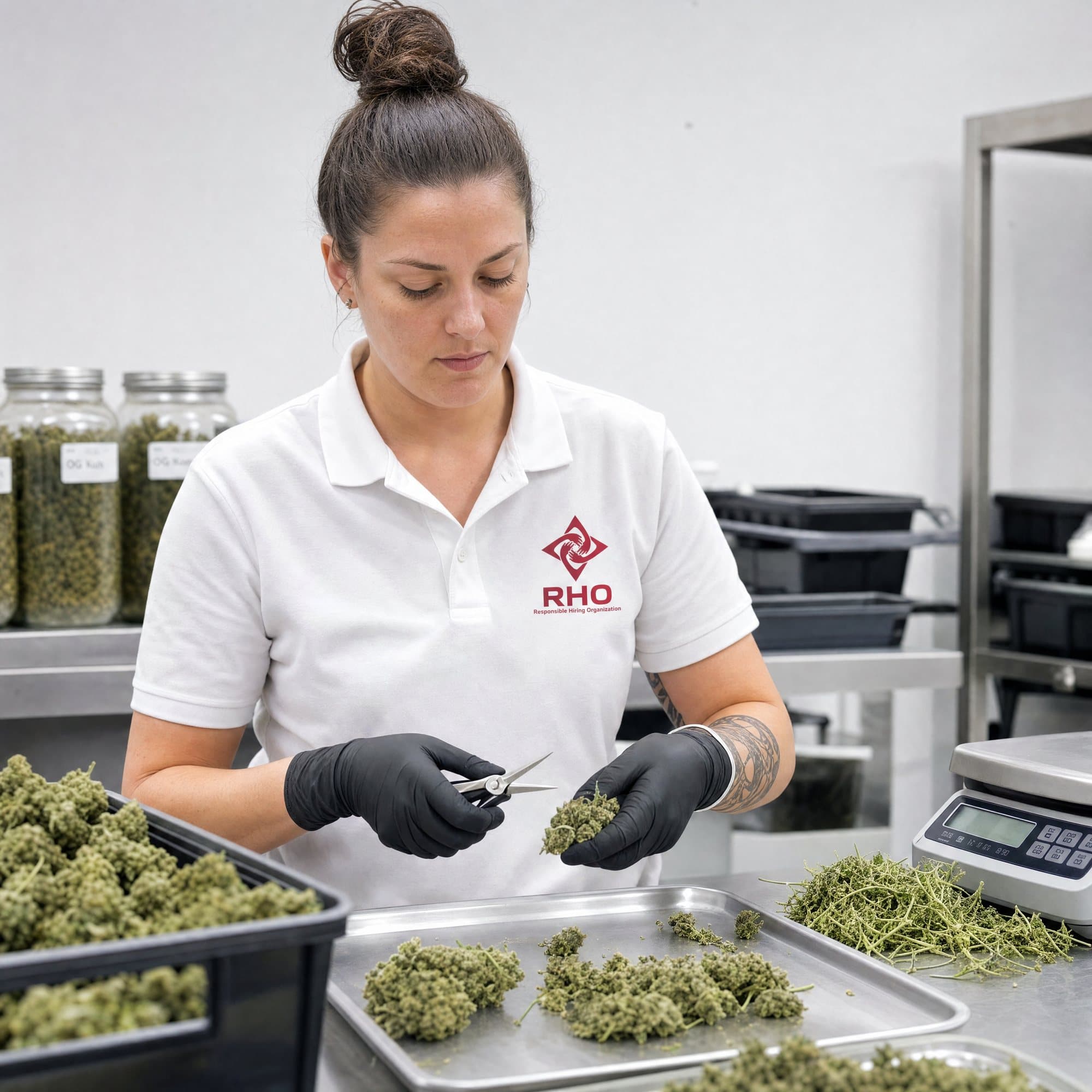
Trimming
Hand or machine trim to your standard, at a steady pace, for hours.
Cultivation support
Watering, transplanting, moving plants and keeping humidity-controlled grow rooms clean.
Post-harvest
Supporting cutting, hanging, drying and curing, with each batch retaining its tag.
Packaging
Weighing, filling, labeling and sealing, with each label matching up with the correct product.
Sorting and quality
Sorting by grade and pulling anything that doesn't meet the standard.
Sanitation
Cleaning rooms, equipment and surfaces at the frequency specified in your procedures.
For every position, the most important attributes are dependability and thoroughness. While experience is certainly beneficial, the person who slows down to pay attention to the details and follows procedure will last longer than the quick one who cuts corners. Plus, in a trim room, that careful employee will often end up faster than the speedy one by week two.
Plan crews around the harvest calendar
| Phase | The work | Staffing pattern |
|---|---|---|
| Vegetative growth | Watering, transplanting, moving plants, cleaning rooms | A small, steady crew |
| Harvest | Cutting, hanging, moving plants to dry rooms | A short surge, room by room |
| Drying and curing | Monitoring, moving and bucking | Steady, with a few extra hands |
| Trimming | Hand or machine trim to standard | The biggest surge: plan it first |
| Packaging | Weighing, filling, labeling, sealing | Steady, with spikes before big orders |
With outdoor grows you have one large fall harvest. Indoor grows staggered on a rotating schedule harvest one room at a time, all year. Regardless, you know the trim crew surge weeks in advance, so schedule it weeks in advance, and have personnel come in a few days early to train before harvest comes.
What training does a crew need before the first shift?
Facility rules and access
Opening doors to, and entering, only those rooms permitted by your license and procedures, and knowing what's allowed inside.
Sanitation and gowning
Washing hands and wearing gloves, hairnets and any gowning. Show them how in person. Don't just describe it.
Handling and tracking
Batch flow. Why does the tag stay with the product? What do you do if there is a discrepancy?
The quality standard
Good trim side by side with bad trim. What to do with anything in between.
Working comfortably
Chair and table height, tool grip, breaks and task rotation for long trim shifts.
Who to ask
A named lead on every shift.
It's that fifth step that counts. Performing the same task or similar tasks repetitively and working in awkward positions are two factors OSHA identifies as increasing risk of musculoskeletal disorders. Ergonomics, or fitting the job to the person, reduces muscle fatigue, increases productivity and reduces the incidence and severity of musculoskeletal disorders. Trim room work is about as repetitive as it gets.
How do you keep a good crew between harvests?
Your ideal trim crew is the one you used previously. Maintain a list of individuals who met your expectations. Inform your agency of the individuals you want back and give as much notice as possible. Returning employees know your rules, your rooms and your expectations. There will be less training and fewer errors during that first week.
Between crops, some of your top trimmers might qualify for packaging, sorting or sanitation if they are cross-trained. That way you keep quality people close and occupied. Also it creates a bench for your leads to pull from when your next room comes down. The ones who stick around during the slow times often become your leads.
Cannabis staffing mistakes
- Booking the trim crew the week the plants come down
- Letting batches mix at the trim table
- Training for speed before quality
- Moving a new crew through every room on day one
- Assuming general labor experience covers your sanitation rules
Cannabis facility staffing questions
Who regulates cannabis businesses in Michigan?
The Cannabis Regulatory Agency. Adult-use establishment licensees and medical facilities licensed by the CRA must comply with the Michigan Regulation and Taxation of Marihuana Act, the Medical Marihuana Facilities Licensing Act, and administrative rules promulgated under those acts.
What is Metrc?
A seed-to-sale tracking system that covers all of Michigan. Every plant is tracked with serialized tags and wholesale packages are labeled. Inventory is monitored from growth to drying, curing and retail sale.
Can we bring in a trim crew just for harvest?
Yes. That's why temp and seasonal staffing exist. Schedule it around the harvest date and have them arrive a few days early to train.
Do temporary workers follow our facility's rules?
They should, from minute one. Communicate the rules impacting workers to your agency before anyone is matched, and reiterate them during orientation.
How early should we book a trim crew?
As soon as you know the harvest date. Weeks is better than days. Bringing employees in a few days early to train keeps your first trim day from feeling like a training day.
Who staffs cannabis grows and processors in Michigan?
Staffing agencies that place trimmers, cultivation support or packaging workers do, and the one to hire learns your facility's policies before it places anyone. RHO Hiring staffs cannabis cultivation and processing facilities and prepares workers for your expectations before they set foot in your facility. Call us at (248) 843-0000.
How RHO Hiring staffs Michigan cannabis facilities
Looking to staff your cannabis cultivation or processing facility? RHO Hiring can provide trimmers, cultivation support, processing, packaging, and post-harvest employees, with recurring staffing plans for your busiest seasons. Our workers are screened for dependability and attention to detail and trained in safety protocols before their first day, and we walk them through your facility's expectations before they set foot in the building. We are locally owned and operated, not a franchise, and the owners work directly with our clients. Want to learn more? Read how we staffed five cannabis locations in Hazel Park.
Sources

Next guide
How to choose a staffing agency: do it before your first employee punches in, because that's where the majority of staffing issues begin. Eight questions you should ask every agency, examples of good answers including RHO Hiring's own, and warning signs to look out for.